
If your veterinarian has told you that your dog is due for some lab work, you probably hopped online to learn more. We commend you for doing your due diligence as a concerned pet parent. Unfortunately, the web is full of misinformation shared by well-meaning but ill-informed bloggers, pet parents, and the like. At Leon Valley Veterinary Hospital, we want to ensure you’re getting information straight from veterinarians and not from “Dr. Google”. To avoid this pitfall, we’ve taken some FAQs on lab work for dogs and answered them as thoroughly as possible to get you the facts you need and deserve.
Why might my dog need blood work?
Your dog may need blood work for various reasons. One obvious reason would be if the dog is sick and they come in and need lab work to find out what's wrong with them. Another reason might be if the dog will have surgery and we want to check out to make sure they're healthy enough to withstand the procedure. Illnesses in dogs, such as heartworm disease or intestinal worms, aren’t always obvious, so we do laboratory work to see if those things exist in that particular patient. Blood work during your dog's annual wellness exam gives us a baseline to tell us if something is wrong at future appointments.
Why are laboratory tests so important for my dog’s health?
Dogs can't tell us when they’re not feeling well and will often attempt to hide illness, so by performing lab work, we can detect things that we may not know are going on with your pet. It’s almost like preventive care measures in that we’re trying to uncover an illness before there are any clinical signs of it. That’s what makes lab tests for dogs so critical, as we can address any underlying or obscure disease before it becomes more apparent and makes the patient more ill.
What types of lab work can be done, and how are these tests done?
There are many different types of lab work that we conduct on dogs.
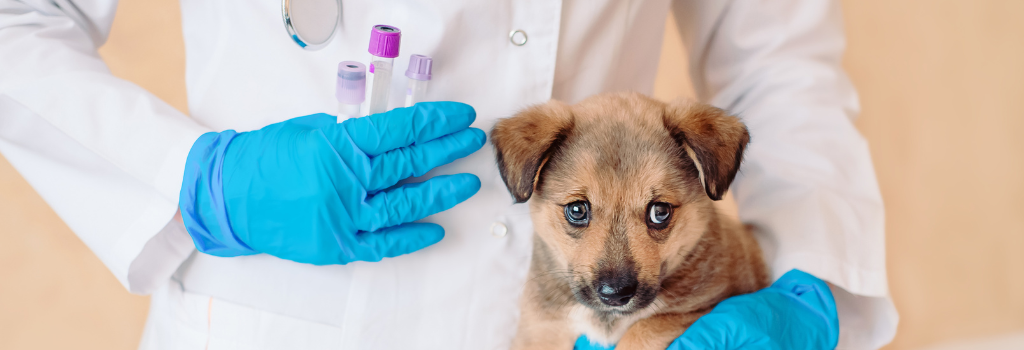
Some of the routine lab work that we perform on dogs are:
- Urinalysis to test for possible signs of infection
- Complete blood counts (CBCs)
- Annual heartworm and other tests for intestinal parasites
- Fecal exams
- Testing any suspicious lumps or bumps
- Blood chemistry panels
- Thyroid tests
- Glucose tests
Most veterinary clinics offer these tests in-house, but we can also send them out for more specialized testing.
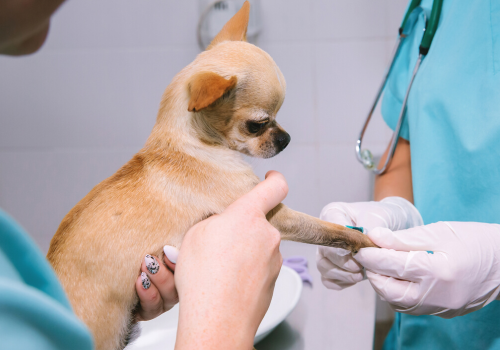
How do baseline lab tests benefit the health of my dog?
Some clients might think, "Well, my dog’s not sick. Why do I need to do blood work?" We know that a pet normally runs a certain number on specific values when we have a baseline. Then all of a sudden, when we get a value that is perhaps much higher or way lower than what that dog's “normal” was during their annual wellness exam, the baseline comes into play. It helps us to determine what might be wrong with your pet.
Why is early detection and diagnosis of dog illnesses using lab work so important?
If we catch and treat diseases early, the prognosis is nearly always better. Let's take kidneys, for example. If your dog’s kidneys begin failing for whatever reason, whether it’s from a toxin or simply old age, those failing nephrons don't come back. And a dog can tolerate those failing nephrons to a certain extent, but once they get beyond that point, it's a very slippery slope. In other words, sometimes they can be too far gone for us to be able to pull them back and improve their quality of life. Had we had that same dog during a wellness exam years before, their BUN was likely slightly elevated, and that would have indicated that the dog’s kidney function might be impaired. That is the prime time when you can put that dog on corrective diets and various supplements and do other things to halt the progression of those failing kidneys. So early detection of dog illnesses and disease is nearly always going to carry a better prognosis.
At Leon Valley Veterinary Hospital, your pet is our priority. If you have any questions, don't hesitate to call our team at (210) 681-1391, or you can email us at [email protected].